
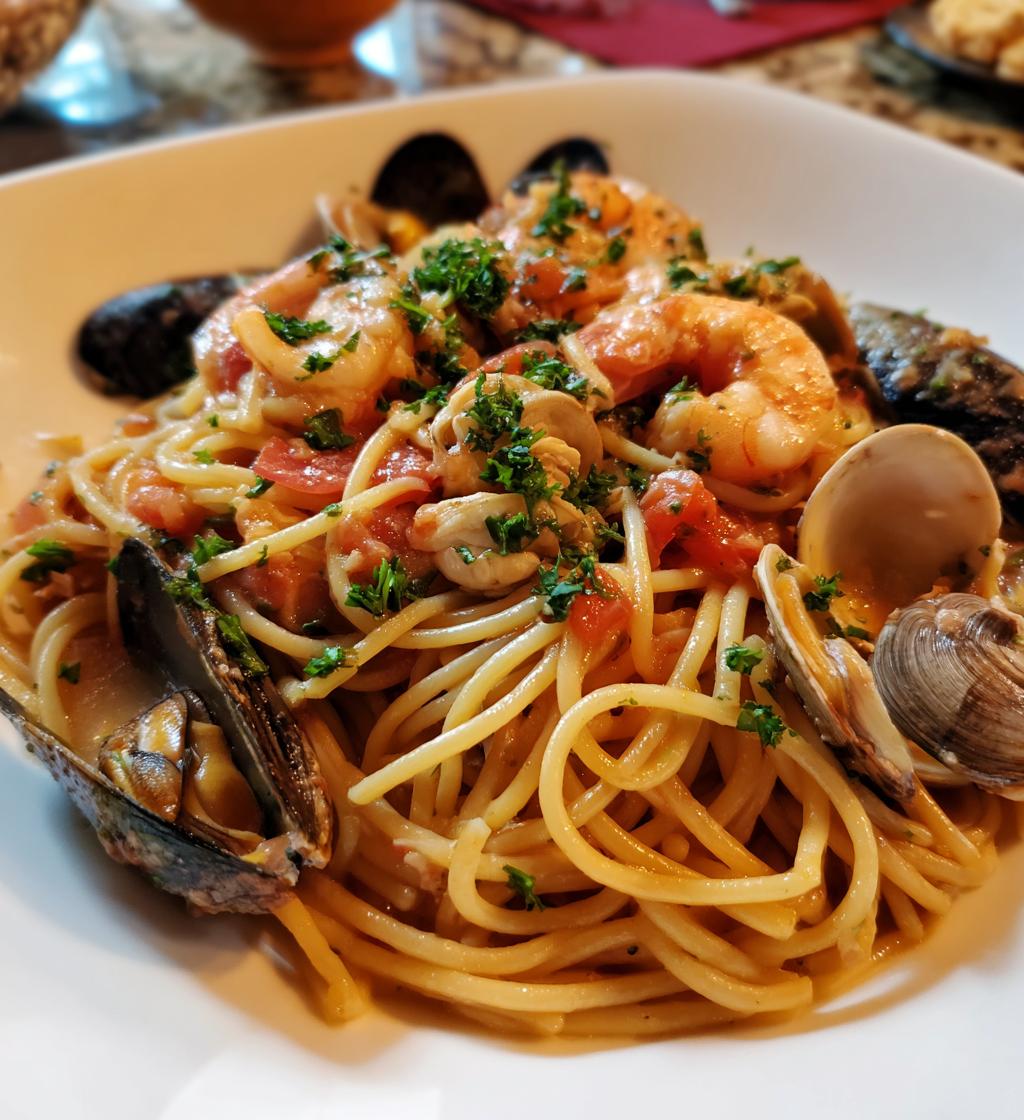
Close your eyes and imagine the Italian coast—sun, sea, and the most incredible aroma of garlic, tomatoes, and fresh seafood wafting through the air. That’s exactly what spaghetti allo scoglio brings to your table! I first fell in love with this dish on a tiny trattoria terrace in Sicily, where the chef taught me the secret: let the seafood shine in a simple, vibrant sauce. It’s one of those magical recipes that feels fancy but comes together so easily. Trust me, one bite of those briny clams and sweet shrimp tangled in al dente pasta, and you’ll be transported.
Why You’ll Love Spaghetti allo scoglio
This dish is pure magic—here’s why it’ll become your new favorite:
- Tastes like a vacation in Italy (without the flight!)
- Ready in under 30 minutes—perfect for busy nights
- Uses simple ingredients that let the seafood shine
- Feels fancy but is actually easy to make
- Customizable with whatever fresh seafood you find
Key Benefits of Spaghetti allo scoglio
- Freshness explosion: The briny clams, sweet shrimp, and tender squid create layers of flavor
- Perfect balance: Light tomato sauce lets the seafood be the star
- One-pan wonder: Cook pasta separately, but everything else comes together in one skillet
- Dinner party hero: Impressive enough for guests, easy enough for weeknights
- Healthy indulgence: Packed with protein and flavor, not heavy cream or butter
Ingredients for Spaghetti allo scoglio
(Pro tip: Measure everything before you start—it cooks fast once you get going!)
- 400g spaghetti (the good stuff—bronze-cut holds sauce best)
- 200g mixed seafood (I use clams, mussels, shrimp, and squid—see notes below)
- 2 cloves garlic, minced (more if you’re like me and love garlic breath)
- 400g canned tomatoes (San Marzano if you can find them)
- ½ glass white wine (something dry you’d actually drink)
- 2 tbsp olive oil (the good extra virgin kind—this is Italy after all)
- ½ tsp chili flakes (or more if you like it spicy—I usually do)
- Salt to taste (for pasta water and seasoning)
- Fresh parsley, chopped (don’t skip this—it’s the bright green finish that makes it pop)
Ingredient Notes for Spaghetti allo scoglio
Here’s why these ingredients matter:
- Seafood: Fresh is non-negotiable here. If the fish counter smells fishy, walk away! Ask for sustainably caught if possible. Frozen works in a pinch—just thaw completely first.
- Tomatoes: Canned whole tomatoes crushed by hand give the best texture. That tinny taste? Means cheap tomatoes—splurge a little here.
- Wine: Skip the “cooking wine” nonsense. Use a dry Italian white like Pinot Grigio—you’ll taste the difference.
- Pasta: Spaghetti is classic, but linguine works too. Just don’t use angel hair—it’ll drown in the sauce.
- Chili flakes: These add warmth, not heat. Want it fiery? Add a whole teaspoon—I won’t judge.
How to Make Spaghetti allo scoglio
Let’s do this! I’ll walk you through each step—trust me, it’s easier than you think. The key is timing: have everything prepped before you start cooking because once that seafood hits the pan, things move fast!
Step-by-Step Spaghetti allo scoglio Instructions
- Prep the seafood: Give everything a good rinse—especially those clams and mussels. Scrub any stubborn grit off the shells. Pat dry with paper towels (wet seafood steams instead of searing).
- Cook the pasta: Bring a big pot of salted water to boil (it should taste like the sea). Add spaghetti and cook 1 minute less than package says—we want it al dente since it’ll finish in the sauce.
- Start the sauce: Heat olive oil in your largest skillet over medium. Add garlic and chili flakes—stir just until fragrant (about 30 seconds). Don’t let the garlic brown or it’ll turn bitter!
- Sear the seafood: Crank the heat to medium-high. Add shrimp and squid first—they need more time. After 1 minute, toss in clams and mussels. Listen for that glorious sizzle!
- Deglaze with wine: Pour in the white wine—it’ll hiss and steam. Let it bubble for 1 minute to cook off the alcohol (but keep all that flavor).
- Simmer the sauce: Crush the tomatoes with your hands as you add them to the pan—juices and all. Reduce heat and let it bubble gently for 10 minutes. You’ll see the sauce thicken slightly.
- Combine everything: Use tongs to transfer the pasta straight from the pot to the skillet. Toss vigorously—the starchy pasta water clinging to the noodles helps the sauce cling.
- Finish and serve: Discard any unopened mussels/clams (they were dead before cooking). Sprinkle with parsley and give one last toss. Serve immediately with extra chili flakes for the brave!
Pro tip: If the sauce seems too thick, splash in a little pasta water. Too thin? Let it reduce for another minute off heat. And whatever you do, don’t skip that final parsley—it’s like a flavor highlighter!
Tips for Perfect Spaghetti allo scoglio
After making this dish more times than I can count (and yes, burning a pan or two along the way), here are my hard-earned secrets:
- Seafood prep is everything: Soak clams/mussels in cold water with a tablespoon of flour for 20 minutes—they’ll purge sand like magic. Scrub those shells!
- Don’t crowd the pan: Cook seafood in batches if needed. Steamed seafood = sad seafood. You want that caramelized sizzle.
- Undercook the pasta: It keeps cooking in the sauce. I pull it when it’s still a tiny bit firm in the center (bite test!).
- Reserve pasta water: That starchy liquid gold is your sauce’s best friend—add it by the tablespoon if things get dry.
- Season in layers: Salt the pasta water, then lightly season the sauce. Seafood brings its own saltiness—taste before adding more!
- Heat control: Medium-high for searing, then dial it back when simmering. Burnt garlic ruins everything.
- Fresh herbs last: Toss in parsley right before serving. Its bright flavor disappears if cooked too long.
Common Mistakes to Avoid
Learn from my kitchen disasters so you don’t repeat them:
- Using questionable seafood: If it smells fishy at the store, imagine how bad it’ll taste cooked. Fresh should smell like the ocean, not a dock at low tide.
- Skipping the wine: That splash of white wine makes the sauce sing. No wine? Use bottled clam juice or even chicken broth—but it won’t be the same.
- Overcooking the squid: It turns rubbery in seconds. Cook just until opaque—about 2 minutes max.
- Drowning in sauce: This isn’t a saucy pasta—it should lightly coat the noodles, not pool on the plate.
- Forgetting to check shells: Tap any unopened clams/mussels before cooking—if they don’t close, toss ’em. Dead shellfish = food poisoning risk.
- Rushing the simmer: Those 10 minutes let flavors marry. Cutting it short leaves you with raw tomato taste.
Serving Suggestions for Spaghetti allo scoglio
Now for the best part—digging in! Here’s how I love to serve this dish to make it feel extra special:
- Crusty bread: A must for sopping up every last drop of that briny, garlicky sauce. I like to toast slices of ciabatta rubbed with garlic—so good!
- Simple green salad: A crisp arugula salad with lemon vinaigrette cuts through the richness perfectly.
- Chilled white wine: The same Pinot Grigio you cooked with makes the perfect pairing. Pro tip: Keep it in the fridge until the last second—nothing worse than warm white wine.
- Lemon wedges: A squeeze of fresh lemon right at the table brightens everything up.
- Extra chili flakes: For those who like it spicy (me! me!), put a small bowl on the table.
Presentation matters too! Here’s how I make it look as good as it tastes:
- Use pasta bowls instead of plates—they show off all that beautiful seafood.
- Twirl the spaghetti with tongs for height—it makes the dish look restaurant-worthy.
- Make sure some shells peek out—those open clams and mussels are part of the charm.
- Finish with a generous sprinkle of parsley—that pop of green makes everything look fresh.
- Serve with small empty bowls for discarded shells—much classier than piling them on the table.
My favorite way? Al fresco dining with a view (even if it’s just your backyard). The smell of garlic and sea breeze—okay, maybe I’m romanticizing, but trust me, it’s magical!
Storage and Reheating
Okay, real talk—this dish is best eaten fresh. But if you’ve got leftovers (lucky you!), here’s how to handle them without turning your beautiful seafood pasta into rubber:
- Fridge storage: Cool completely, then transfer to an airtight container. It’ll keep for up to 2 days, but the seafood texture changes (shrimp gets firmer, clams dry out a bit).
- Reheating gently: Add a splash of water or broth to a skillet, then warm over medium-low heat, stirring often. Microwave = last resort (30 sec bursts, stirring between).
- What to expect: The pasta absorbs sauce overnight—it’ll be drier. A quick drizzle of olive oil before reheating helps.
- Seafood check: Give it a sniff test—if anything smells off (not just “fishy,” but actually bad), toss it immediately.
- Freezing? Don’t. The seafood turns mushy when thawed. If you must, freeze just the sauce (without pasta) for up to 1 month.
Honestly? I usually make just enough for one meal—because nothing beats that first glorious bite of perfectly cooked seafood and al dente pasta. But if you do have leftovers, a quick pasta frittata the next morning isn’t the worst idea…
Nutritional Information for Spaghetti allo scoglio
Let’s be real—we’re not eating this because it’s “health food,” but the good news? It’s way more balanced than most pasta dishes! Here’s the scoop per serving (and remember, these are estimates—your exact numbers will vary based on ingredients):
- Calories: About 450 (mostly from that gorgeous al dente pasta)
- Protein: 25g (thanks to all that amazing seafood!)
- Carbs: 65g (the spaghetti does most of the heavy lifting here)
- Fat: 10g (that’s that good olive oil doing its thing)
- Fiber: 4g (tomato skins and whole wheat pasta would bump this up)
- Sugar: 8g (all natural from the tomatoes—no added sugar here)
Quick heads up: If you’re tracking closely, remember that canned tomatoes can vary in sodium, and seafood sizes differ (those jumbo shrimp add more protein). But honestly? When something tastes this good and gives you a protein boost from the sea, I say enjoy every bite without overthinking it!
FAQ About Spaghetti allo scoglio
Got questions? I’ve got answers! Here are the things people ask me most about this dish:
Can I Make Spaghetti allo scoglio Ahead?
Sort of! Prep the sauce base (garlic, tomatoes, wine) in advance, but cook seafood fresh—it gets rubbery if reheated. Store components separately, then combine when ready to serve.
What Seafood Works Best?
Clams, mussels, and shrimp are my holy trinity—they bring briny, sweet, and tender textures. Squid’s great too! Scallops work but reduce cook time (they toughen fast).
Is Spaghetti allo scoglio Gluten-Free?
Regular pasta isn’t GF, but swap in your favorite gluten-free spaghetti—just adjust cook time. Check that your seafood isn’t dusted with flour (some prepped squid is).
Can I use frozen seafood?
Yes, but thaw completely first (overnight in fridge). Pat dry—excess water makes sauce watery. Fresh tastes better, but frozen works in a pinch!
How spicy should it be?
Start with ½ tsp chili flakes—you can always add more. Italians keep it subtle, but I often double it because I love that kick!
Print
30-Minute Spaghetti allo Scoglio: Irresistible Seafood Heaven
- Total Time: 35 minutes
- Yield: 4 servings 1x
- Diet: Low Calorie
Description
Spaghetti allo scoglio is a classic Italian seafood pasta dish. It combines fresh seafood with al dente spaghetti in a light tomato sauce.
Ingredients
- 400g spaghetti
- 200g mixed seafood (clams, mussels, shrimp, squid)
- 2 cloves garlic, minced
- 400g canned tomatoes
- 1/2 glass white wine
- 2 tbsp olive oil
- 1/2 tsp chili flakes
- Salt to taste
- Fresh parsley, chopped
Instructions
- Clean the seafood thoroughly.
- Cook spaghetti in salted boiling water until al dente.
- Heat olive oil in a pan and sauté garlic and chili flakes.
- Add seafood and cook for 2 minutes.
- Pour in white wine and let it evaporate.
- Add tomatoes and simmer for 10 minutes.
- Drain pasta and add it to the sauce.
- Toss everything together and garnish with parsley.
Notes
- Use fresh seafood for best results.
- Discard any unopened shells after cooking.
- Adjust chili to your preference.
- Prep Time: 15 minutes
- Cook Time: 20 minutes
- Category: Main Course
- Method: Stovetop
- Cuisine: Italian
Nutrition
- Serving Size: 1 plate
- Calories: 450
- Sugar: 8g
- Sodium: 600mg
- Fat: 10g
- Saturated Fat: 2g
- Unsaturated Fat: 6g
- Trans Fat: 0g
- Carbohydrates: 65g
- Fiber: 4g
- Protein: 25g
- Cholesterol: 120mg
Keywords: spaghetti, seafood, Italian recipe, pasta, tomato sauce