
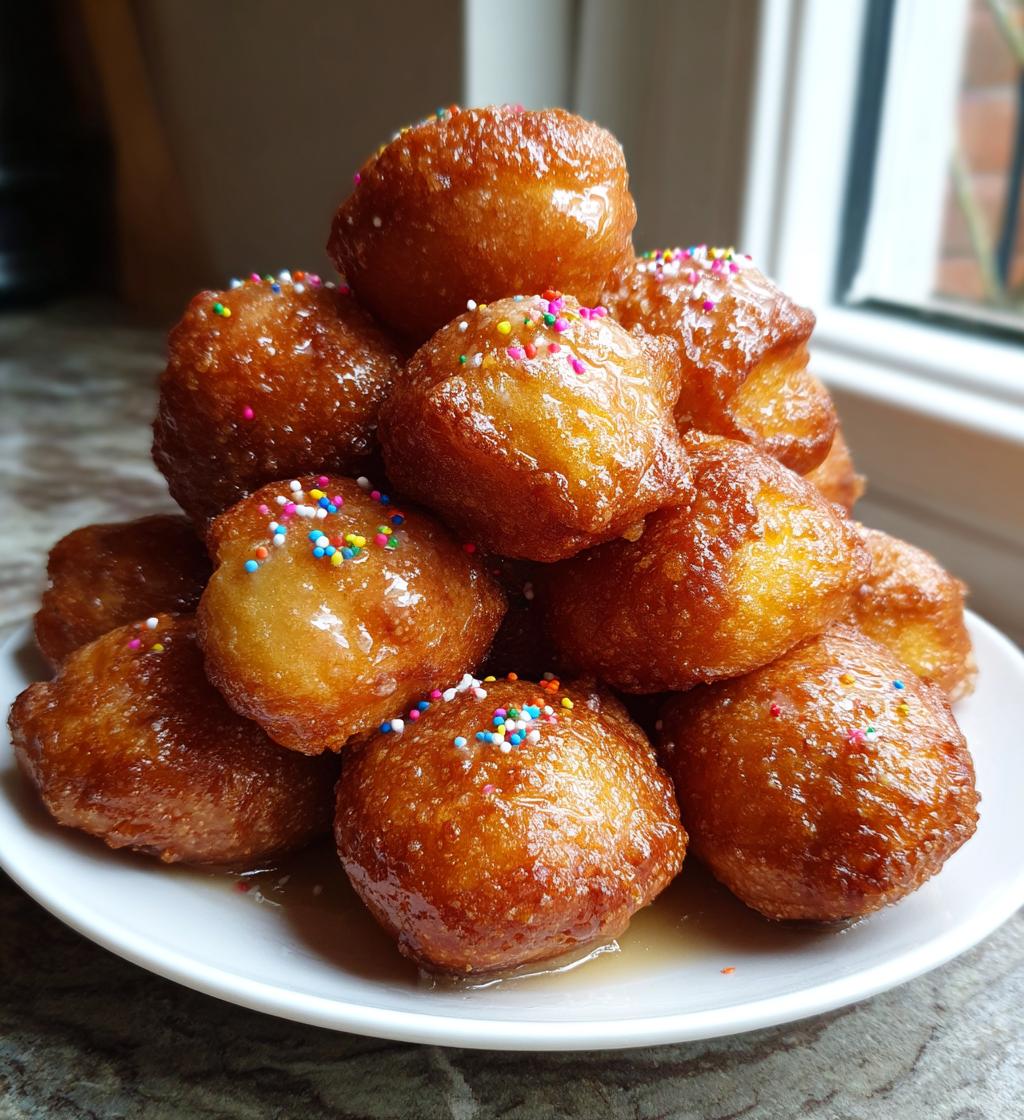
Oh, Pignolata Calabrese—just saying the name makes me smile! This little gem of a dessert takes me straight back to my grandmother’s kitchen in southern Italy, where she’d fry up batches of these golden dough balls for special occasions. Pignolata (pronounced “peen-yoh-LAH-tah,” if you’re curious!) is a classic Calabrian treat, often shaped into a wreath or pyramid and drenched in sticky honey or glossy sugar glaze. It’s crunchy, sweet, and downright addictive—like tiny bites of celebration. Some families save it for Christmas or Easter, but honestly? I make it year-round because life’s too short to skip the honey-coated joys.
Ingredients for Pignolata Calabrese
(Psst—don’t worry, these are all pantry staples or easy finds!)
- 500g all-purpose flour (spooned & leveled, please!)
- 3 large eggs (room temp works best)
- 50g granulated sugar
- 50g unsalted butter, melted (let it cool slightly)
- 1 tsp baking powder (the magic fluffer-upper)
- Zest of 1 lemon (brightness is key!)
- Pinch of fine sea salt (balances the sweet)
- Vegetable oil for frying (sunflower or peanut oil work great)
- 300g honey OR sugar glaze (your sticky-sweet choice!)
- Sprinkles/chopped nuts for flair (optional but fun)
Ingredient Notes & Substitutions
- Lemon zest: Don’t skip it! That citrusy pop cuts through the richness. No lemons? Orange zest works too.
- Honey vs. glaze: Traditional Calabrian pignolata uses honey (warm it slightly for easier coating). For a quicker option, mix powdered sugar with a splash of milk or lemon juice.
- Butter: If you only have salted butter, just omit the extra pinch of salt.
- Oil: Avoid olive oil—its strong flavor overpowers. Neutral oils fry cleaner.
- Gluten-free? Swap in a 1:1 GF flour blend, but expect a slightly denser bite.
How to Make Pignolata Calabrese
Okay, let’s get our hands sticky! This is the fun part—turning simple ingredients into golden, honey-drenched goodness. Don’t rush; enjoy the process like Nonna would. (And yes, licking honey off your fingers is totally allowed.)
Preparing the Dough
- In a big bowl, whisk together flour, sugar, baking powder, lemon zest, and salt. Trust me—that zest makes all the difference!
- Make a well in the center and crack in the eggs. Pour in the melted butter (not too hot, or you’ll scramble those eggs—yikes!).
- Mix with a fork, then get in there with your hands. Knead for 5 minutes until it’s smooth and slightly springy—like Play-Doh’s fancier cousin.
- Cover with a towel and let it rest 15 minutes. This relaxes the gluten, making rolling easier.
Frying the Dough Balls
- Heat 2 inches of oil in a deep pot to 350°F (175°C). No thermometer? Toss in a breadcrumb—it should sizzle instantly.
- Roll dough into marble-sized balls (about 2cm). Pro tip: Keep them uniform so they cook evenly.
- Fry in small batches—don’t crowd the pan! They’ll puff up and turn golden in 2-3 minutes. Flip occasionally with a slotted spoon.
- Drain on paper towels. Listen to that glorious crunch when you tap them!
Coating and Shaping
- Warm honey in a saucepan until runny (or make glaze: 1 cup powdered sugar + 2 tbsp lemon juice/milk).
- Toss fried balls in the honey/glaze while warm—work fast before it sets! Use two forks to coat evenly.
- On a plate, shape into a wreath (circle with a hole in the middle) or pyramid (stack them like tiny edible bricks).
- Immediately decorate with sprinkles or nuts so they stick. Let cool until the glaze hardens—about 30 minutes.
Tips for Perfect Pignolata Calabrese
Want your pignolata to be as magical as Nonna’s? Here are my foolproof secrets:
- Oil temp is everything: Too hot = burnt outsides, raw insides. Too cool = greasy balls. Keep it steady at 350°F!
- Work in batches: Frying 10-12 balls at a time prevents temperature drops and sticking disasters.
- Glaze game strong: Warm honey/glaze slightly—it coats better. And move fast before it sets!
- Rest that dough: Those 15 minutes make rolling way easier (no spring-back frustration).
- Double the joy: Make extra—these disappear faster than you can say “Calabria!”
Serving and Storing Pignolata Calabrese
Serve your pignolata at room temperature—it’s perfect with coffee for breakfast (yes, I said breakfast!) or as an after-dinner treat. Leftovers? Ha! But if you miraculously have some, store them in an airtight container at room temp for 2 days. They lose crunch over time, so I say: gather friends and devour immediately. No regrets!
Nutritional Information for Pignolata Calabrese
Here’s the scoop per serving (approx. 100g): 350 calories, 25g sugar, 12g fat. But let’s be real—this is a treat, not a salad! Values vary by ingredients, so enjoy in your happiest moderation.
Frequently Asked Questions
Can I bake Pignolata Calabrese instead of frying?
Technically? Yes—but you’ll lose that signature crispiness! Bake at 375°F (190°C) on parchment paper until golden (about 15 minutes), then glaze. It’ll taste good, but trust me, frying is worth the extra step for that authentic Calabrian crunch.
How long does Pignolata keep?
Best eaten the same day (that honey-coated crunch!), but stored airtight at room temp, it lasts 2 days. The glaze may soften—just re-crisp in a 300°F (150°C) oven for 5 minutes if needed.
Can I make the dough ahead?
Absolutely! Wrap it tightly and refrigerate for up to 24 hours. Let it sit at room temp for 30 minutes before rolling—cold dough is stubborn.
Why are my dough balls dense?
Over-kneading or old baking powder could be culprits. Mix just until combined, and check your baking powder’s expiry date—it should bubble in hot water if active!
Can I freeze Pignolata?
Freeze unglazed fried balls for up to a month. Reheat at 350°F (175°C) for 5 minutes, then glaze fresh. Frozen-glazed ones turn soggy—learned that the hard way!
Irresistible Pignolata Calabrese: 3 Secrets to Perfect Honey Balls
- Total Time: 50 minutes
- Yield: 6 servings 1x
- Diet: Vegetarian
Description
Pignolata Calabrese is a traditional Italian dessert from Calabria. It consists of small fried dough balls coated in honey or sugar glaze, often shaped into a wreath or pyramid.
Ingredients
- 500g all-purpose flour
- 3 eggs
- 50g sugar
- 50g butter, melted
- 1 tsp baking powder
- Zest of 1 lemon
- Pinch of salt
- Vegetable oil for frying
- 300g honey or sugar glaze
- Sprinkles or chopped nuts for decoration (optional)
Instructions
- Mix flour, sugar, baking powder, lemon zest, and salt in a bowl.
- Add eggs and melted butter, knead into a smooth dough.
- Roll the dough into small balls (about 2cm diameter).
- Heat oil in a deep pan and fry the balls until golden brown.
- Drain on paper towels to remove excess oil.
- Heat honey or prepare sugar glaze in a saucepan.
- Toss the fried balls in the honey or glaze until coated.
- Shape into a wreath or pyramid on a serving plate.
- Decorate with sprinkles or nuts if desired.
- Let cool before serving.
Notes
- Use a neutral oil for frying, like sunflower or peanut oil.
- Work quickly when coating the balls to prevent sticking.
- For a crispier texture, fry in small batches.
- Prep Time: 30 minutes
- Cook Time: 20 minutes
- Category: Dessert
- Method: Frying
- Cuisine: Italian
Nutrition
- Serving Size: 100g
- Calories: 350
- Sugar: 25g
- Sodium: 50mg
- Fat: 12g
- Saturated Fat: 4g
- Unsaturated Fat: 7g
- Trans Fat: 0g
- Carbohydrates: 55g
- Fiber: 1g
- Protein: 6g
- Cholesterol: 60mg
Keywords: Pignolata Calabrese, Italian dessert, honey balls, Calabrian sweets