
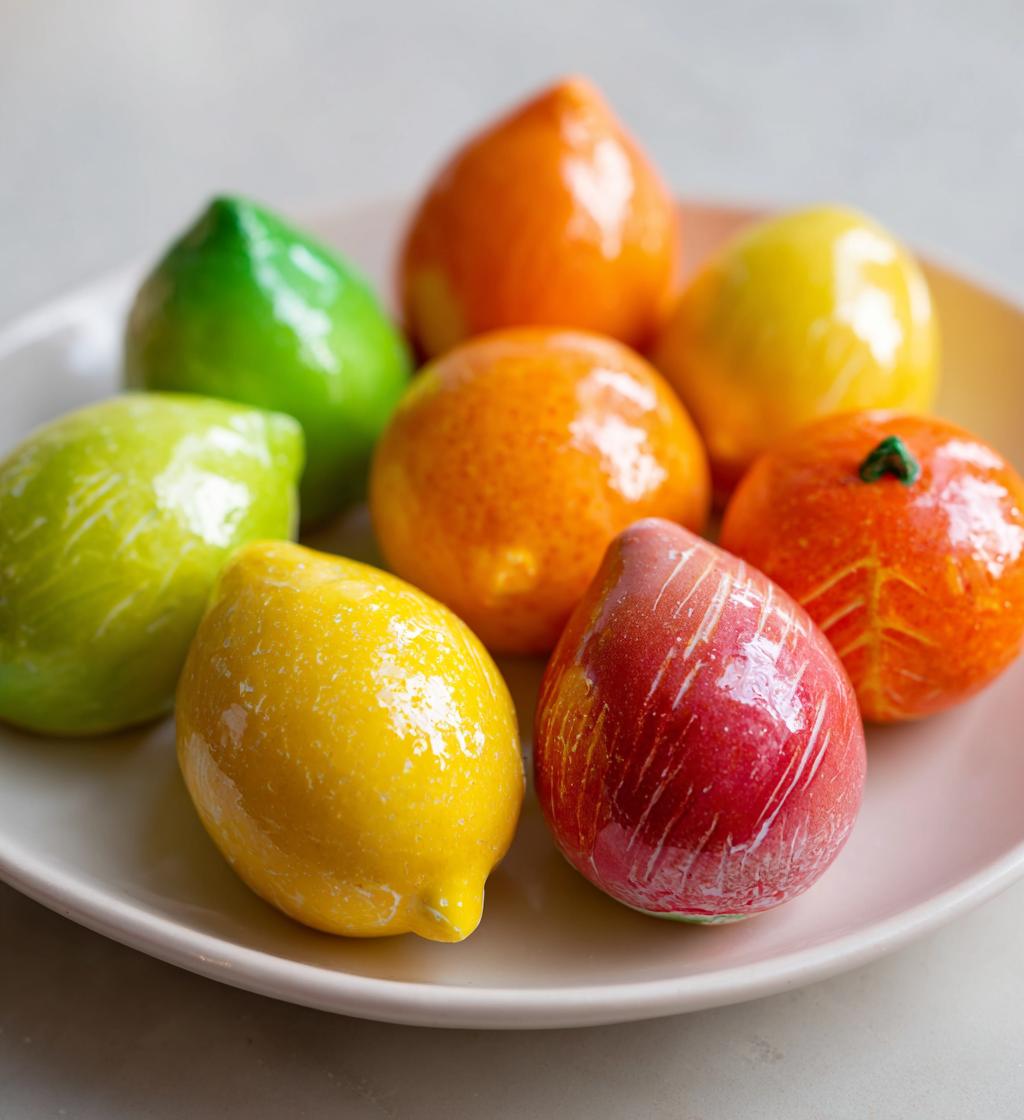
Oh, you have to try making Frutta Martorana—it’s one of my absolute favorite Sicilian treats! Also called Pasta di Mandorle, these little marzipan fruits are pure edible art. I first fell in love with them during a summer festival in Palermo, where entire market stalls were covered in bright, hand-shaped “fruits” that looked almost too perfect to eat. (Spoiler: I ate plenty!) Traditionally made for celebrations and holidays, these almond paste confections bring such joy with their playful colors and delicate shapes. The best part? They’re surprisingly simple to make at home—just almond flour, sugar, and a bit of patience for shaping. Trust me, once you start molding these, you won’t want to stop!
Ingredients for Frutta Martorana (Pasta di Mandorle)
You won’t believe how few ingredients you need to make these gorgeous little fruits! Here’s what I always keep on hand—measurements are key here, so grab your kitchen scale (or measuring cups if you’re in a pinch). The almond flour and sugar ratio is what gives these their perfect dense-yet-tender bite. Pro tip: Splurge on good-quality almond flour—it makes all the difference in flavor!
- 250g almond flour (fine grind—no lumps!)
- 250g powdered sugar (sifted if it’s clumpy)
- 1 large egg white (room temperature binds best)
- 1 tsp almond extract (the magic flavor booster)
- Assorted food coloring gels (not liquid—they’re too watery!)
- 1 tbsp lemon juice (trust me, it brightens everything)
See? Just six simple things! You might already have most of these in your pantry. I like to lay everything out before starting—it makes the process feel like an art project (which it totally is). Oh, and don’t stress if your food coloring collection isn’t extensive—even just primary colors can mix into gorgeous fruit shades!
How to Make Frutta Martorana (Pasta di Mandorle)
Okay, let’s get our hands messy—this is the fun part! Making Frutta Martorana is like playing with edible Play-Doh, but way more delicious. Don’t worry if your first few fruits look a little… abstract. Mine totally did! You’ll get the hang of it quickly. Here’s exactly how I do it:
Mixing the Dough
- In a big bowl, whisk together the almond flour and powdered sugar—get out any lumps! I like to sift them if my sugar’s been sitting awhile.
- Make a well in the center and add the egg white and almond extract. Stir with a fork at first, then dive in with clean hands.
- Knead for a good 5 minutes until it’s smooth like modeling clay. If it sticks to your hands, dust them with a bit of powdered sugar.
Pro tip: The dough should hold together when pinched but not feel sticky. Too dry? Add a few drops of lemon juice. Too wet? More powdered sugar, a teaspoon at a time.
Coloring and Shaping
- Divide the dough into portions for each fruit color. Want lemons, strawberries, and pears? Do about 3-4 chunks.
- Add food coloring GEL (not liquid!) a toothpick dab at a time—colors intensify as you knead! Wear gloves unless you want rainbow fingers for days.
- Shape into fruits: Roll lemons into ovals, poke strawberry dimples with a toothpick, flatten apples slightly. Get creative!
My favorite hack? Look at real fruit for inspiration! I keep a bowl of cherries or a lemon on the counter while shaping. And don’t stress perfection—rustic fruits have charm!
Drying and Storing
- Arrange your fruits on parchment paper—not touching! They need airflow.
- Let them dry at room temperature for 24 hours. No cheating! This sets the shape.
- Store in an airtight container between layers of wax paper. They’ll keep for 2 weeks (if they last that long!).
Important: Don’t refrigerate—it makes them sweat and lose color. And resist stacking them while drying unless you want flat-sided “fruits” (ask me how I know!).
Tips for Perfect Frutta Martorana (Pasta di Mandorle)
Alright, let me spill all my hard-earned secrets for flawless Frutta Martorana! I’ve made every mistake so you don’t have to. Here’s what I’ve learned:
- Dough too sticky? Sprinkle powdered sugar a teaspoon at a time until it’s play-dough consistency. Too much and it’ll crack—go slow!
- Gloves are non-negotiable. That neon pink food coloring will haunt your cuticles for days. (My hands looked tie-dyed after my first batch!)
- Knead colors thoroughly. Uneven coloring shows up when shaping—take an extra minute to blend.
- Work fast with small portions. Almond paste dries out! Keep unused dough wrapped in plastic.
- Toothpicks are your best friends. Use them to add strawberry seeds, apple stems, or citrus textures.
- Less is more with food coloring. Start with a tiny dab—you can always add more. Bright fruits look fun, but neon isn’t exactly natural!
- Dust surfaces lightly. A whisper of powdered sugar prevents sticking without drying out the dough.
- Patience with drying. Rushing the 24-hour wait = smudged masterpieces. Let them cure properly!
One last thing: don’t obsess over perfection! My first “apples” looked more like lumpy potatoes, but they still tasted amazing. The charm is in the handmade wobbles—just like nonna used to make!
Variations of Frutta Martorana (Pasta di Mandorle)
Once you’ve mastered the basic fruits, the real fun begins—playing with shapes and colors! I love how versatile this dough is. Here are some of my favorite twists to keep things exciting:
- Tropical vibes: Shape mango slices (flatten ovals with a ridge), pineapples (texture with a knife), or coconuts (rolled balls with shredded coconut pressed on).
- Berry medley: Tiny strawberries (cone shapes with sesame seed “seeds”), blueberries (perfect little spheres), or raspberries (cluster small balls together).
- Autumn harvest: Pears (teardrop shapes with cinnamon-dusted stems), figs (purple dough with white “bloom”), or even tiny pumpkins (orange with clove stems).
- Natural colors: Skip the food dyes! Matcha powder for green, beet juice for pink, turmeric for yellow—just adjust dough consistency with extra sugar if needed.
- Festive flair: Christmas? Make holly berries and leaves. Easter? Pastel eggs with speckles. Valentine’s? Heart-shaped “apples” with rosy cheeks!
- Mini everything: Go tiny! Itty-bitty grapes on toothpick stems or a bowl of cherry-sized citrus fruits are ridiculously cute.
My latest obsession? Making “bruised” fruits by dusting edges with cocoa powder—it makes them look freshly picked! And don’t be afraid to mix techniques: I once made watermelon slices by layering pink and green dough. Messy? Yes. Adorable? Absolutely.
Pro tip: Keep a bowl of water nearby when shaping—damp fingers help smooth seams without sticking. Just don’t overdo it or your colors will run!
Serving Suggestions for Frutta Martorana (Pasta di Mandorle)
Okay, here’s where you get to show off your edible artwork! I love watching people’s faces when they realize these gorgeous fruits are actually sweets. Here are my favorite ways to serve them—trust me, presentation is half the fun:
- Festive platters: Arrange them on a wooden board with real leaves (fig or grape leaves work beautifully) for that “just picked” look. Mix colors and sizes—it’s all about the wow factor!
- After-dinner treat: Serve 2-3 pieces per person with tiny forks alongside espresso or dessert wine. The almond flavor pairs perfectly with Vin Santo or a sweet Moscato.
- Gift boxes: Line small boxes with parchment and nestle fruits in tissue paper. Tie with twine—homemade gifts that look professionally fancy!
- Cake toppers: Place a few on top of a plain almond cake—instant showstopper! Just add them right before serving so they stay perfect.
- Dessert table stars: Create a “fruit basket” centerpiece by piling them in a pretty bowl. Bonus points if you sneak in a few real fruits for guests to discover!
- With cheese: Sounds weird, but trust me—a platter with sharp pecorino and these sweet fruits is divine. The salty-sweet combo is unreal.
My favorite trick? Hide a few in a fruit bowl with actual apples and pears—the double-takes are priceless! Just maybe warn people before they bite into a wax lemon thinking it’s real…
Pro tip: If serving outdoors, keep them shaded—direct sun can make the colors fade. And always let guests know they’re edible—I’ve had people admire them for ages before realizing they could eat their artwork!
Storing Frutta Martorana (Pasta di Mandorle)
Here’s the good news—these little almond paste fruits actually improve with a day or two of rest! But you’ve got to store them right, or they’ll go from gorgeous to sad real quick. After many trials (and a few tragic sticky messes), here’s exactly how I keep mine fresh:
- Airtight is everything. Use a container with a tight seal—those adorable cookie tins or glass Tupperware work great. Layer them between sheets of wax paper so they don’t get cozy and stick together.
- Room temp wins. Unlike most desserts, these hate the fridge! Cold makes them sweat and bleed colors. A cool pantry or cupboard is perfect.
- Timing: They’ll stay perfect for up to 2 weeks… if you can resist eating them that long! After that, they might dry out or lose vibrancy.
- Humidity alert: Living somewhere muggy? Toss a silica packet in the container (like the ones from snack bags) to prevent stickiness.
- Reviving dried-out fruits: Oops, forgot to seal the lid? A tiny brush of simple syrup can bring back shine—just don’t soak them!
One time I left a batch in a supposedly “sealed” container that wasn’t… let’s just say I ended up with one giant rainbow marzipan blob. Delicious, but not exactly Instagram-worthy! Moral of the story: test your lids, people.
Nutritional Information for Frutta Martorana (Pasta di Mandorle)
Okay, let’s be real—these almond paste fruits are treats, not health food! But the good news? They’re packed with protein from all that almond flour, and a little goes a long way for satisfaction. Here’s the rough breakdown per piece (about the size of a small apricot):
- Calories: ~80 (perfect for a sweet nibble!)
- Carbs: 10g (mostly from the powdered sugar—no surprises there)
- Fat: 4g (the good kind from almonds!)
- Protein: 2g (thank you, almond flour!)
- Fiber: 1g (bonus!)
Important note: These numbers can vary based on your exact ingredients—especially if you go wild with the food coloring or make giant fruits! And hey, if you’re watching sugar intake, these are naturally gluten-free and dairy-free, which makes them a great option for many diets.
Pro tip: I like to think of these as my “fancy almond energy bites” when I need a pick-me-up with my afternoon coffee. Just maybe don’t eat ten in one sitting… not that I’ve ever done that or anything.
Frequently Asked Questions About Frutta Martorana (Pasta di Mandorle)
I get so many questions about these little almond paste fruits—here are the answers to everything people ask me most! Bookmark this section for when you’re mid-recipe and go, “Wait, what?!”
Can I Use Almond Meal Instead of Almond Flour?
Technically yes, but I don’t recommend it! Almond meal is coarser (it includes the skins) and will give your fruits a slightly gritty texture. For that smooth, professional look, splurge on fine almond flour. In a pinch? Pulse almond meal in a food processor with half the sugar to refine it—but really, good flour is worth it!
How Long Does Frutta Martorana Last?
Stored properly (that’s airtight at room temp, no cheating!), they’ll stay perfect for about 2 weeks. After that, they might dry out or lose color. Pro tip: If they harden, a quick zap in the microwave (5 seconds!) can soften them slightly—just don’t let them get warm or they’ll sweat.
Can I Freeze Frutta Martorana?
Oh honey, no. Freezing makes the texture weirdly crumbly and can cause colors to bleed. These are best enjoyed fresh or within that 2-week window. If you must store longer, make the uncolored dough and freeze that—then thaw, color, and shape when needed!
Got more questions? Slide into my DMs with your Frutta Martorana adventures—I want to see your colorful creations! Tag me in your photos so I can cheer you on. Now go forth and make edible art!
Print
Irresistible Frutta Martorana: 6-Step Almond Fruit Magic
- Total Time: 24 hours 30 minutes
- Yield: 20 pieces 1x
- Diet: Vegetarian
Description
Frutta Martorana, also known as Pasta di Mandorle, is a traditional Sicilian dessert made from almond paste. These colorful marzipan fruits are shaped to resemble real fruits and are often served during festivals and special occasions.
Ingredients
- 250g almond flour
- 250g powdered sugar
- 1 egg white
- 1 tsp almond extract
- Food coloring (assorted colors)
- 1 tbsp lemon juice
Instructions
- Mix almond flour and powdered sugar in a bowl.
- Add egg white and almond extract, then knead into a smooth dough.
- Divide the dough into portions and color each with food coloring.
- Shape the dough into small fruits like lemons, oranges, or apples.
- Let them dry for 24 hours before serving.
Notes
- Store in an airtight container to keep them fresh.
- Use gloves when coloring to avoid staining your hands.
- If the dough is too sticky, add a little more powdered sugar.
- Prep Time: 30 minutes
- Cook Time: 0 minutes
- Category: Dessert
- Method: No-Bake
- Cuisine: Italian
Nutrition
- Serving Size: 1 piece
- Calories: 80
- Sugar: 8g
- Sodium: 5mg
- Fat: 4g
- Saturated Fat: 0.3g
- Unsaturated Fat: 3g
- Trans Fat: 0g
- Carbohydrates: 10g
- Fiber: 1g
- Protein: 2g
- Cholesterol: 0mg
Keywords: Frutta Martorana, Pasta di Mandorle, Sicilian dessert, marzipan fruits, almond paste