
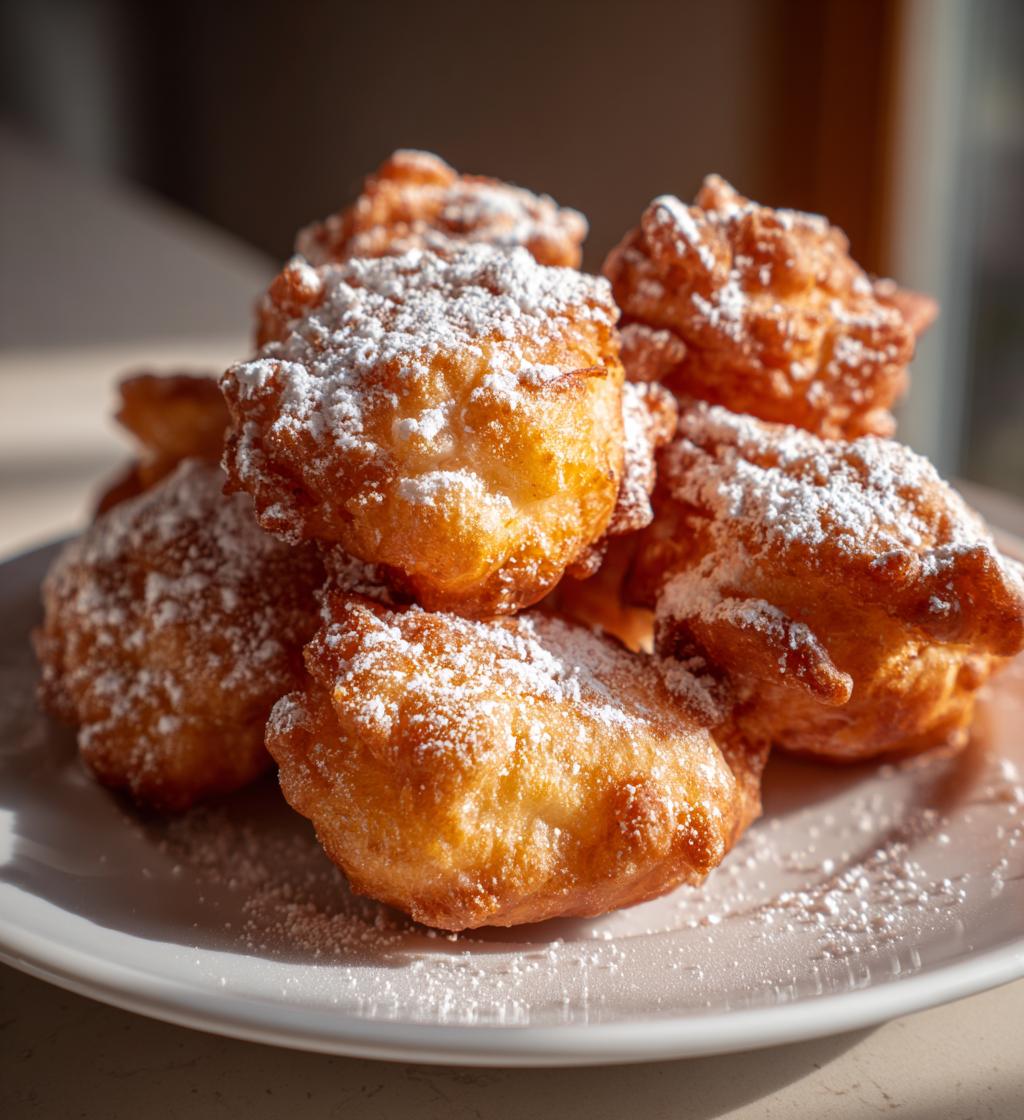
Oh, dolci di carnevale—just saying the name makes me smile! I remember my first taste of these golden, sugar-dusted treats at a tiny street festival in Rome. The air was crisp, music was playing, and the scent of frying dough was absolutely irresistible. These Italian carnival sweets are more than just fried pastries—they’re little bites of joy, meant to be shared during the lively Carnevale season. Crispy on the outside, soft inside, and finished with a snowy dusting of powdered sugar, they’re pure magic. Whether you’re celebrating or just craving something sweet, making them at home brings that festive Italian spirit right to your kitchen.
Ingredients for Dolci di Carnevale
(Tip: Grab everything before starting—trust me, you don’t want to stop mid-knead!)
- 500g all-purpose flour (plus extra for dusting)
- 100g granulated sugar (I like mine extra sweet, so adjust if needed)
- 3 large eggs (room temperature blends better)
- 50g unsalted butter, melted (let it cool slightly)
- 1 tsp pure vanilla extract (the good stuff makes a difference!)
- 1 tbsp baking powder (fresh for maximum puff)
- Pinch of salt (balances the sweetness)
- Vegetable oil for frying (about 1 liter—you’ll need depth)
- Powdered sugar for dusting (be generous!)
How to Make Dolci di Carnevale
Okay, let’s get to the fun part—turning these simple ingredients into crispy, sugary delights! Don’t worry, it’s easier than you think, and I’ll walk you through every step. Just follow along, and soon you’ll be frying up carnival magic like a pro.
Preparing the Dough
- Start by whisking together the flour, sugar, baking powder, and salt in a big bowl. You want everything evenly mixed—no sneaky clumps of baking powder!
- Make a well in the center and crack in the eggs. Add the melted butter (not too hot!) and vanilla. Now, roll up your sleeves and mix with a fork or your hands until it starts coming together.
- Turn the dough onto a lightly floured surface and knead for about 5 minutes. You’re looking for smooth and slightly elastic—think Play-Doh vibes. If it’s sticky, add a sprinkle of flour, but don’t overdo it!
- Cover the dough with a clean towel and let it rest for 30 minutes. This relaxes the gluten and makes rolling way easier. (Use this time to tidy up or dance to Italian folk music—your call.)
Shaping and Frying Dolci di Carnevale
- Roll the rested dough to about 1cm thickness—no need to be perfect here. Thicker means fluffier, thinner means crispier. I like both, so sometimes I split the batch!
- Cut into fun shapes: squares, circles, or even strips. Traditional? Stars and ribbons. Lazy? Triangles taste just as good.
- Heat the oil in a deep pot to 180°C (350°F). Test with a scrap of dough—it should sizzle gently and float to the top. Too hot? They’ll burn. Too cool? They’ll soak up oil. (A candy thermometer helps if you’re nervous.)
- Fry in small batches, 2–3 minutes per side, until golden brown. Flip them with a slotted spoon—careful, they’re delicate! Drain on paper towels and immediately dust with powdered sugar. Eat one warm (chef’s privilege!) and try not to swoon.
Tips for Perfect Dolci di Carnevale
Want your carnival sweets to turn out just like Nonna’s? Here are my foolproof tricks:
- Rest the dough: That 30-minute wait is non-negotiable—it prevents tough, chewy results.
- Oil temperature is key: Too cool = greasy, too hot = burnt. Aim for steady 180°C (350°F).
- Fry in batches: Crowding the pot drops the oil temp and makes them cook unevenly.
- Dust while warm: Powdered sugar sticks better when they’re fresh out of the oil.
- Serve same-day: They’re best eaten within hours—though good luck keeping them around that long!
Serving and Storing Dolci di Carnevale
These little treats are absolute heaven served warm, when the sugar melts just slightly into the crispy edges. Pile them high on a platter and dust with extra powdered sugar—because more is always better! If (somehow) you have leftovers, store them in an airtight container at room temperature for up to 2 days. For longer keeping, freeze them unfrosted in a single layer, then reheat in the oven and dust with sugar before serving. But let’s be real—they’re so good, they rarely last past the first hour!
Dolci di Carnevale Variations
Once you’ve mastered the classic version, try these fun twists to mix things up! My personal favorite? Adding a teaspoon of lemon zest to the dough—it gives the sweet dough a bright, fresh kick. Here are a few more easy ideas:
- Citrus twist: Add orange or lemon zest to the dough for a sunny flavor
- Spiced: Mix in 1 tsp cinnamon or nutmeg with the dry ingredients
- Chocolate chip: Fold in mini chocolate chips before rolling (kids adore these!)
- Almond: Replace 50g flour with ground almonds for a nutty texture
- Honey glaze: Drizzle warm dolci with honey instead of powdered sugar
Nutritional Information for Dolci di Carnevale
Here’s the scoop on what’s in these sweet treats (per piece, based on 20 servings):
- Calories: 150
- Sugar: 8g
- Fat: 5g (2g saturated)
- Carbs: 22g
- Protein: 3g
Note: Values can vary slightly based on exact ingredients and oil absorption during frying. Enjoy in moderation—or don’t, it’s Carnevale after all!
FAQs About Dolci di Carnevale
Can I bake these instead of frying?
Absolutely! Brush shaped dough with melted butter and bake at 190°C (375°F) for 12–15 minutes until golden. They won’t be quite as crispy, but still delicious.
What can I use instead of butter?
Margarine works in a pinch, but for richness, I’d stick with butter. Olive oil adds an Italian twist—just reduce slightly since it’s liquid.
Why did my dough turn out tough?
Over-kneading is usually the culprit! Mix just until smooth—think gentle hugs, not a wrestling match.
Can I make these gluten-free?
Yes! Swap the flour for a 1:1 gluten-free blend. Add 1/2 tsp xanthan gum if your mix doesn’t include it.
How thin should I roll the dough?
About 1cm is perfect—thicker stays cakey inside, thinner gets crispier. I like to test both and see which I prefer!
Share Your Dolci di Carnevale Experience
Did you make these festive treats? I’d love to hear how they turned out! Leave a comment below—tell me your favorite shape or your twist on the recipe. And if you loved them, a star rating makes my day. Happy frying!
Print
3 Irresistibly Crispy Dolci di Carnevale You Must Try
- Total Time: 50 minutes
- Yield: 20 pieces 1x
- Diet: Vegetarian
Description
Dolci di Carnevale are traditional Italian carnival sweets, often fried and dusted with sugar. They are popular during the festive season.
Ingredients
- 500g all-purpose flour
- 100g sugar
- 3 eggs
- 50g butter, melted
- 1 tsp vanilla extract
- 1 tbsp baking powder
- Pinch of salt
- Vegetable oil for frying
- Powdered sugar for dusting
Instructions
- In a large bowl, mix flour, sugar, baking powder, and salt.
- Add eggs, melted butter, and vanilla extract. Knead into a smooth dough.
- Roll out the dough to 1cm thickness and cut into shapes.
- Heat oil in a deep pan to 180°C (350°F).
- Fry the dough pieces until golden brown, about 2-3 minutes per side.
- Drain on paper towels and dust with powdered sugar before serving.
Notes
- Let the dough rest for 30 minutes before rolling for easier handling.
- Use a slotted spoon to turn the dough pieces while frying.
- Serve warm for the best taste.
- Prep Time: 30 minutes
- Cook Time: 20 minutes
- Category: Dessert
- Method: Frying
- Cuisine: Italian
Nutrition
- Serving Size: 1 piece
- Calories: 150
- Sugar: 8g
- Sodium: 50mg
- Fat: 5g
- Saturated Fat: 2g
- Unsaturated Fat: 2g
- Trans Fat: 0g
- Carbohydrates: 22g
- Fiber: 1g
- Protein: 3g
- Cholesterol: 30mg
Keywords: carnival sweets, Italian dessert, fried pastries