
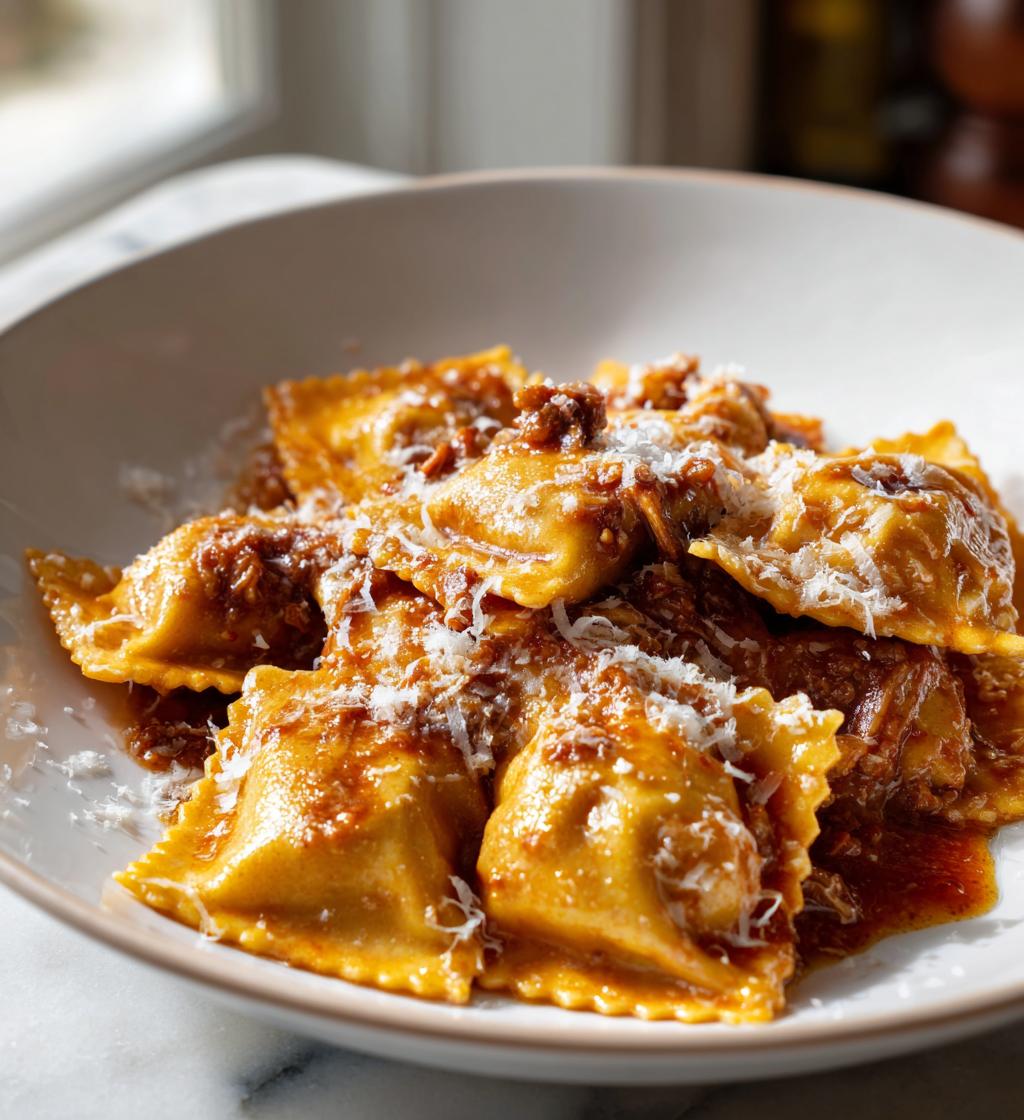
Oh, Agnolotti Piemontesi al Ragù—just saying it makes my mouth water! This is the kind of dish that takes me straight back to my first trip to Piedmont, where every bite felt like a warm hug from an Italian nonna. It’s classic comfort food, but with that special Northern Italian elegance—tender pockets of fresh pasta stuffed with rich meat, all smothered in a slow-simmered ragù that’s deep, savory, and just a little bit wine-kissed. Trust me, once you try this, you’ll understand why it’s been a staple in Piedmontese kitchens for generations. And the best part? It’s way easier to make than you’d think!
Ingredients for Agnolotti Piemontesi al Ragù
Okay, let’s gather everything you’ll need—this is where the magic starts! I promise, nothing too fancy here, just good, honest ingredients that come together beautifully. (Pro tip: Fresh pasta makes all the difference, but don’t stress if you can’t find it—I’ve got substitutions covered in the FAQs!) Here’s what you’ll need:
- 300g fresh agnolotti pasta (those little stuffed pillows of joy!)
- 200g ground beef (go for 80/20—a bit of fat adds flavor)
- 100g ground pork (trust me, the combo with beef is *chef’s kiss*)
- 1 onion, finely chopped (I cry every time, but it’s worth it)
- 1 carrot, finely chopped (tiny dice—it melts into the sauce)
- 1 celery stalk, finely chopped (same as the carrot—no big chunks!)
- 400g tomato passata (smooth, not chunky—this is your sauce base)
- 50ml red wine (use something you’d drink, not “cooking wine”)
- 2 tbsp olive oil (good quality—it’s the foundation of your ragù)
- Salt and pepper to taste (season as you go—taste, taste, taste!)
- 50g grated Parmigiano Reggiano (freshly grated, none of the pre-shredded stuff!)
That’s it! Simple, right? Now, let’s get cooking—I can already smell that ragù simmering away…
How to Make Agnolotti Piemontesi al Ragù
Alright, let’s dive into the fun part—cooking! Don’t let the fancy name intimidate you; this dish is all about patience and love (and maybe a glass of that red wine while you cook). Here’s how to bring those Piedmontese flavors to life in your own kitchen:
Preparing the Ragù Sauce
- Heat the olive oil in a large pan over medium heat. Add the chopped onion, carrot, and celery—this trio (we call it soffritto in Italian) is the flavor base. Sauté until they’re soft and fragrant, about 5 minutes. Stir often so they don’t brown!
- Add the ground beef and pork, breaking it up with a wooden spoon. Cook until nicely browned, about 8 minutes. You want those little crispy bits—that’s flavor gold!
- Pour in the red wine and let it bubble away for 2 minutes, scraping up any browned bits from the pan. This is where the magic happens—the wine adds depth you can’t skip!
- Stir in the tomato passata, reduce the heat to low, and let it simmer gently for 1 hour. Stir occasionally, and if it looks too thick, add a splash of water. Low and slow is key here—no rushing a good ragù!
Cooking the Agnolotti
- When your ragù has about 10 minutes left, bring a large pot of salted water to a rolling boil. Use enough salt—it should taste like the sea! This seasons the pasta from within.
- Gently add the agnolotti and cook for just 3–4 minutes (fresh pasta cooks fast!). They’re done when they float to the top and are tender but still have a little bite.
- Reserve a cup of pasta water, then drain the agnolotti—don’t rinse! That starchy water helps the sauce cling later.
- Toss the drained pasta with the ragù sauce, adding a splash of pasta water if needed to loosen it up. The agnolotti should be coated but not swimming.
And that’s it—you’re ready to plate up! Just sprinkle with that glorious Parmigiano Reggiano, and mangia!
Tips for Perfect Agnolotti Piemontesi al Ragù
Okay, let me share my hard-earned secrets—the little things that take this dish from good to nonna-approved amazing. These are the tricks I’ve picked up after (many) trial-and-error batches!
- Fresh pasta is worth the hunt: I know I sound like a broken record, but those store-bought fresh agnolotti make all the difference—they’re tender and delicate, unlike dried. If you’re feeling ambitious, try making your own pasta dough! (My first attempt was… lumpy, but practice makes perfect.)
- Low and slow wins the ragù race: That hour of simmering isn’t just a suggestion—it’s what transforms your sauce from “meat in tomatoes” to something deep and complex. Once, I rushed it at high heat and ended up with burnt edges and raw tomato taste. Never again!
- Salt your pasta water like the Mediterranean: Seriously, taste it—it should make you pucker slightly. Undersalted water = bland pasta, no matter how good your sauce is. (I learned this the sad, flavorless way.)
- Save that pasta water!: That starchy liquid is magic for adjusting your sauce’s consistency. I’ve ruined perfectly good agnolotti by adding plain water instead—it dilutes all the flavor you worked so hard for.
- Grate your cheese fresh: Pre-shredded Parmigiano has anti-caking agents that make it grainy. Take the extra minute to grate it yourself—you’ll taste the difference in every melty, nutty bite.
There you go—my kitchen confessions for agnolotti success! Now go forth and cook like a Piedmontese nonna (or at least like someone who’s learned from their mistakes).
Serving Suggestions for Agnolotti Piemontesi al Ragù
Now, let’s talk about turning this dish into a full experience—because even the most incredible agnolotti deserves the perfect supporting cast. Here’s how I love to serve mine (usually while hovering over the table, insisting everyone “try it while it’s hot!”):
- Parmigiano Reggiano avalanche: Don’t be shy—grate that cheese right over the top at the table. The heat melts it slightly, and who can resist those salty, nutty curls? (I certainly can’t—just ask my family.)
- A swipe of crusty bread: There’s always someone (usually me) who wants to mop up every last bit of ragù. Serve a warm, rustic loaf on the side—bonus points if it’s homemade!
- Simple bitter greens: A light arugula salad with lemon and olive oil cuts through the richness. My aunt in Turin always served it this way, and now I get why—that peppery crunch is *chef’s kiss*.
- A glass of Piedmontese red: Barbera or Dolcetto wines from the same region? Yes, please. They’re fruity enough to complement the ragù without overpowering it. (Unless it’s lunchtime—then I stick with sparkling water and pretend to be responsible.)
That’s it—no fuss, just good food meant to be shared. Pass the bread, pour the wine, and watch how fast those plates clean themselves!
Storing and Reheating Agnolotti Piemontesi al Ragù
Okay, confession time—I rarely have leftovers because this dish disappears fast in my house. But if you do manage to save some (impressive self-control!), here’s how to keep it tasting just as delicious as day one. No sad, soggy pasta allowed!
- Fridge storage: Let the agnolotti cool completely (but don’t leave it out more than 2 hours—food safety first!). Store in an airtight container for up to 3 days. I like to keep the sauce and pasta separate if possible—just toss them together when reheating.
- Stovetop revival: This is my go-to method! Warm a splash of water or broth in a pan over medium-low heat, add the agnolotti and sauce, and gently stir until heated through. Takes about 5 minutes. The steam keeps the pasta tender instead of rubbery.
- Microwave caution: I know it’s tempting, but microwaves zap the moisture right out of delicate fresh pasta. If you must, use 30-second bursts at 50% power with a damp paper towel on top. But really… treat yourself to the stovetop method.
- Freezing: You can freeze the ragù sauce (without pasta) for up to 2 months. Thaw overnight in the fridge, then reheat and cook fresh agnolotti to serve. Frozen cooked pasta? Not my favorite—the texture turns mushy when thawed. Learned that the hard way!
There you go—now you can enjoy your Piedmontese masterpiece even on busy weeknights. Just promise me you won’t nuke it into oblivion, okay?
Nutritional Information for Agnolotti Piemontesi al Ragù
Okay, let’s talk numbers—because even comfort food deserves a little transparency! Now, I’m no nutritionist (my degree is in eating, not math), but here’s the rough breakdown per serving. Remember, these are estimates—your exact amounts will vary based on ingredients and how generous you are with that Parmigiano!
- Calories: About 450 per serving (worth every one!)
- Fat: 20g (mostly from that glorious olive oil and meat—no skimping here)
- Saturated Fat: 7g (blame the Parmigiano—I’m not apologizing)
- Protein: 25g (thanks to all that hearty meat and cheese)
- Carbs: 45g (mostly from the pasta—it’s the good kind of carbs, promise)
- Fiber: 4g (those veggies in the soffritto pull their weight)
- Sugar: 5g (just from the natural sweetness of tomatoes and carrots)
- Sodium: 300mg (adjust to taste—I like mine well-seasoned!)
A quick disclaimer: These numbers are ballpark figures based on standard ingredients. Your actual counts might dance around a bit depending on brands, exact measurements, and whether you sneak an extra handful of cheese (no judgment here). If you’re tracking closely, I’d recommend plugging your specific ingredients into a nutrition calculator. But honestly? Sometimes food is just about joy—and this dish delivers plenty of that!
Frequently Asked Questions About Agnolotti Piemontesi al Ragù
I get it—even the most delicious recipes come with questions! Here are the ones I hear most often (usually while friends hover over my stove, stealing bites). Don’t worry, I’ve tested all the workarounds so you don’t have to!
Can I Use Dried Pasta Instead of Fresh?
Short answer: Yes, but… Fresh agnolotti really shine here—they’re tender and delicate, soaking up the ragù like little flavor sponges. If you must use dried, opt for small stuffed pasta like dried tortellini. Cook according to package directions (usually 8–10 minutes), but taste early—nobody wants mushy pasta! Just know the texture won’t be quite as dreamy.
What Can I Substitute for Red Wine?
No wine? No problem! Beef or vegetable broth works in a pinch (about 50ml), though you’ll miss that depth the wine adds. My sneaky trick? A splash of balsamic vinegar (just 1 tsp!) stirred into the broth—it mimics the wine’s acidity. Or skip it entirely and let the tomato and meat flavors lead. (P.S. The alcohol cooks off, but I respect all dietary choices!)
How Do I Freeze Leftovers?
Freeze the ragù sauce only—not the cooked agnolotti (trust me, thawed pasta turns to mush). Cool the sauce completely, then pack it airtight for up to 2 months. Thaw overnight in the fridge, reheat gently on the stove with a splash of water, and toss with freshly cooked pasta. Crisis averted!
Can I Make This Vegetarian?
Absolutely! Swap the meat for mushrooms (cremini or portobello work great)—sauté them until golden before adding to the soffritto. For richness, stir in a tablespoon of tomato paste with the passata. You’ll miss the meaty depth, but it’s still wonderfully savory. (My vegetarian niece approves!)
Why Did My Agnolotti Fall Apart?
Oh no—the dreaded pasta blowout! Usually it’s from overcooking (fresh agnolotti need just 3–4 minutes) or stirring too vigorously. Use a slotted spoon to gently lift them from the water, and fold—don’t stir—when mixing with sauce. If they’re still fragile, your pasta might’ve been too thin—next time, buy from a different brand or practice your homemade pasta rolling skills!
There you go—all the troubleshooting wisdom I’ve gathered from my own kitchen disasters. Now go forth and cook with confidence!
Final Thoughts
There you have it—my love letter to Agnolotti Piemontesi al Ragù! Once you taste those tender pasta parcels swimming in rich ragù, you’ll understand why this dish stole my heart. Give it a try, tweak it to your taste, and let me know how it turns out. Now, who’s hungry?
Print
Irresistible Agnolotti Piemontesi al Ragù in 1 Hour
- Total Time: 1 hour 30 minutes
- Yield: 4 servings 1x
- Diet: None
Description
Agnolotti Piemontesi al Ragù is a traditional Piedmontese pasta dish filled with meat and served with a rich ragù sauce.
Ingredients
- 300g fresh agnolotti pasta
- 200g ground beef
- 100g ground pork
- 1 onion, finely chopped
- 1 carrot, finely chopped
- 1 celery stalk, finely chopped
- 400g tomato passata
- 50ml red wine
- 2 tbsp olive oil
- Salt and pepper to taste
- 50g grated Parmigiano Reggiano
Instructions
- Heat olive oil in a pan and sauté onion, carrot, and celery until soft.
- Add ground beef and pork, cooking until browned.
- Pour in red wine and let it evaporate.
- Stir in tomato passata and simmer for 1 hour.
- Cook agnolotti in boiling salted water for 3-4 minutes.
- Drain pasta and mix with ragù sauce.
- Serve with grated Parmigiano Reggiano.
Notes
- Use fresh pasta for best results.
- Simmer ragù on low heat for deeper flavor.
- Prep Time: 30 minutes
- Cook Time: 1 hour
- Category: Main Course
- Method: Stovetop
- Cuisine: Italian
Nutrition
- Serving Size: 1 portion
- Calories: 450
- Sugar: 5g
- Sodium: 300mg
- Fat: 20g
- Saturated Fat: 7g
- Unsaturated Fat: 10g
- Trans Fat: 0g
- Carbohydrates: 45g
- Fiber: 4g
- Protein: 25g
- Cholesterol: 60mg
Keywords: Agnolotti, Piemontesi, Ragù, Italian pasta